- How long and difficult is the trek?
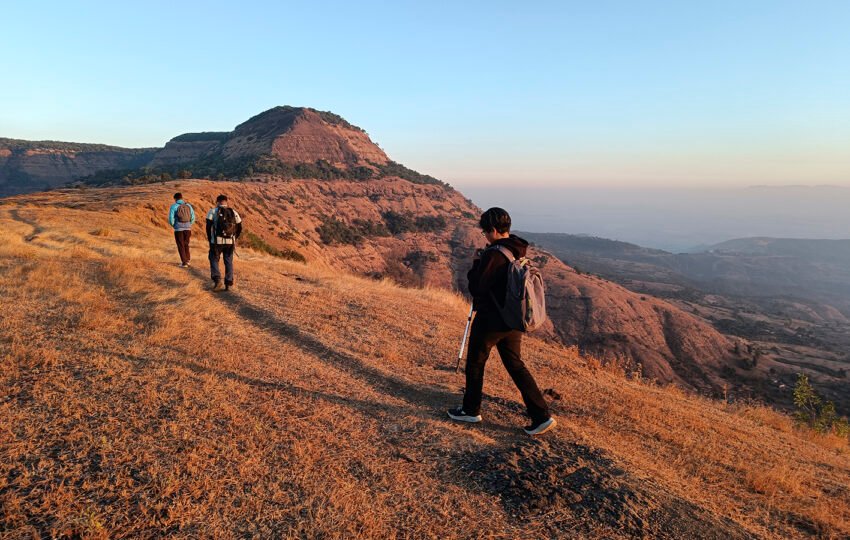
This is primarily a short hike—easy to moderate and suitable for beginners. The goal is to reach a dark-sky location (Garbett Plateau) with minimal light pollution for the best viewing experience.
- What will the stargazing session include?
The session has two components:
1) Laser-Guided Constellation Tour
- Understanding why constellations were created and how ancient travellers and sailors used them for navigation.
- Learning their importance and cultural significance across civilisations.
- Star stories of major winter sky constellations, such as Cassiopeia, Perseus, Andromeda, Orion, and Taurus
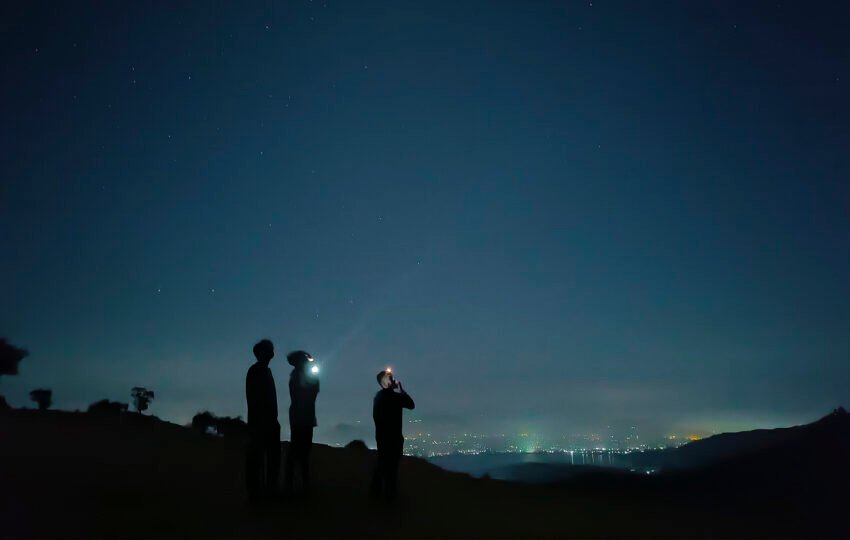
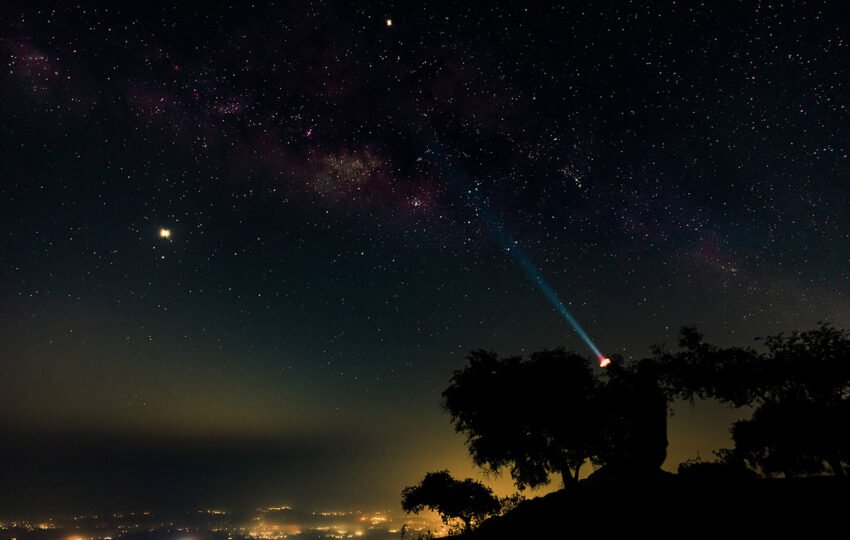
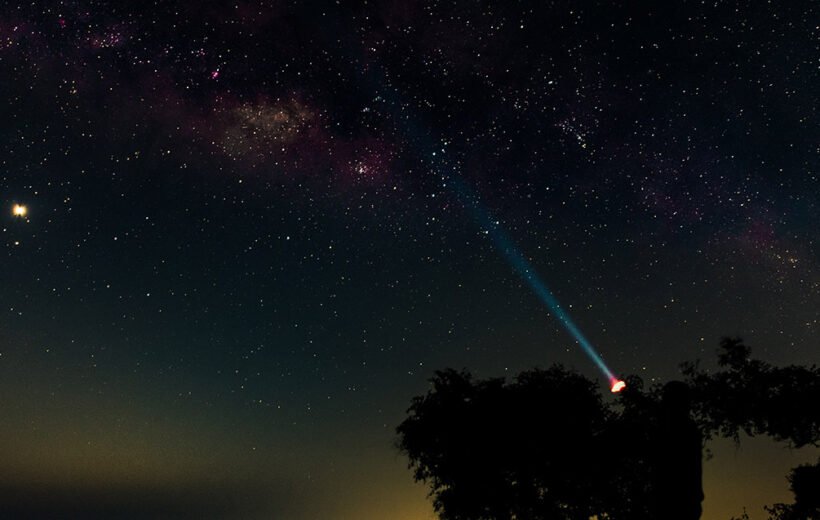
- Identifying major stars, directions, and patterns using a powerful green astronomical laser pointer.
2) Telescope Viewing Session
You’ll be using a 150 mm/6 inch reflector telescope (750 mm focal length) mounted on an equatorial mount with a 25mm (30x magnification) and 9mm (83x magnification) eyepieces. We will cover:
- How a telescope works
- How this model compares to modern space telescopes (Hubble, James Webb, etc.)
- Why are equatorial mounts used for tracking objects
- Understanding key optics concepts (aperture, light-gathering, magnification)
- Objects we will observe (weather & timing permitting): Jupiter and some of its moons, Earth’s Moon (if visible): craters, maria, formation history, impacts, and interesting lunar physics, Star cluster: the Pleiades (Seven Sisters), Bright stars like Betelgeuse and Sirius, with their stories and scientific importance
- Will we be viewing deep-space objects like galaxies or nebulae?
No. This telescope is not designed for deep-space astrophotography or viewing faint nebulae or galaxies. The Andromeda Galaxy, for example, will not appear in its full spiralling shape. Faint nebulas and distant star clusters will not be visible clearly due to limitations of aperture, field conditions, and setup time. Since this is a trek location, carrying a very large, heavy, high-end telescope is not feasible. The focus of this experience is planetary viewing, bright star clusters, and constellation learning, not advanced deep-sky observation.
- Can I bring my own camera for astrophotography?
Yes! If you have either a DSLR or mirrorless camera, a mobile with manual/long exposure mode, and a tripod, you’re welcome to click the night sky. Our naturalists will guide you on basic night sky settings, capturing star trails or constellations, framing the Pleiades or Orion and avoiding overexposure and noise. However, please note that this is not primarily an astrophotography-focused workshop, and telescope-based astrophotography will not be conducted.
- Will we see the Milky Way?
Depending on the moon phase, clouds, and atmospheric clarity, we may see parts of the Milky Way band. Matheran’s lower light pollution improves your chances, but visibility is still weather-dependent.
- Is the session beginner-friendly?
Yes. No prior astronomy knowledge is required. The aim is to make the sky feel accessible, easy to understand, and exciting for everyone.
- What if it is cloudy or foggy?
We will continue with storytelling, mythology and the science of stars, navigation techniques, telescope demonstration, and sky orientation skills. Actual telescope viewing depends entirely on the sky being clear.
- Can children join the session?
Yes! Children who are comfortable with the short hike and nighttime activity are welcome. The content is easy to understand, engaging, and suitable for all ages.
- How long will the entire session be?
Approximately 2–2.5 hours, depending on sky conditions and how long we spend on telescope viewing.